In short
- Mild redness or itching in the first weeks is common with prostaglandin analogues and often settles.
- Eyelid skin darkening is documented with prostaglandins and is often, not always, reversible.
- Swelling, blistering, eye pain or any change in vision: stop and see a doctor.
Where reactions come from
Brow serums fall into three families: peptides, prostaglandin analogues and conditioners. Peptide-led and conditioning formulas produce the fewest reported reactions of any category. Prostaglandin analogues — isopropyl cloprostenate, ethyl tafluprostamide, ethylcloprostenolamide on the label — are related to molecules used in prescription glaucoma drops, and they carry that family's documented side effects.
Any formula can also cause an ordinary irritant or allergic reaction to a preservative, fragrance or plant extract. That is why the INCI list is the first place to look; see how to read a brow serum INCI list.
Reactions that usually resolve
| Reaction | Typical pattern | What to do |
|---|---|---|
| Mild stinging on application | First days, fades within minutes | Apply to fully dry skin; use less product. |
| Light redness or itching along the brow | First weeks, most common with prostaglandins | Pause for a few days. If it returns on restarting, stop. |
| Dryness or flaking | Builds over weeks | Check for retinoids or acids used nearby; keep them away from the brow area. |
Eyelid and skin darkening
Darkening of the skin around the application area is a documented effect of prostaglandin analogues. It is gradual, so it is easy to miss without photographs, and it is often reversible after stopping — though fading can take months. Peptide formulas without a prostaglandin analogue are not associated with it.
The same family of molecules, used as prescription eye drops, is associated with changes in iris colour and with changes to the fat around the eye. Those effects are documented at ophthalmic doses applied to the eye itself, not from brow application; but they are the reason to keep any prostaglandin brow product well away from the lash line and out of the eye.
Photograph the skin, not just the hairs. Darkening is gradual enough that you will not notice it in a mirror.
When to stop, immediately
- Swelling of the eyelid or around the eye.
- Blistering, weeping or a rash that spreads beyond the brow.
- Eye pain, persistent redness of the eye itself, or any change in vision.
- Visible darkening of the eyelid or brow skin compared with your week-zero photographs.
In any of these cases, stop using the product, rinse the area with water, and see a doctor or pharmacist. Take the box with you: the INCI list is what they will need.
Who should talk to a doctor before starting
- Anyone using prescription eye drops, or with glaucoma or another eye condition.
- Anyone who is pregnant or breastfeeding — prostaglandin formulas are not recommended.
- Anyone with eczema, rosacea or a history of contact dermatitis around the eyes.
The patch test
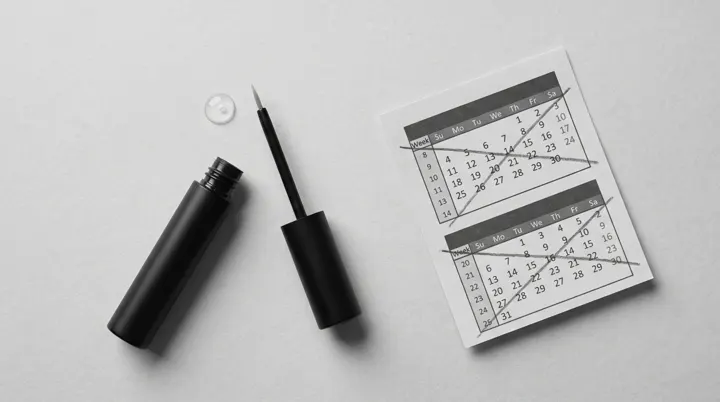
Apply to one brow only for the first week, exactly as directed. If there is no redness, itching or darkening, continue on both. It costs you seven days on one side and saves you a reaction on both.
Questions
Is eyelid darkening permanent?
Often not. Darkening linked to prostaglandin analogues frequently fades after stopping, but it can take months, and it should be checked by a doctor if it does not.
Can I wear contact lenses while using a brow serum?
Yes, if the product stays on the brow. Contact-lens wearers are one group for whom we suggest peptide formulas over prostaglandins.
Are peptide serums completely risk-free?
No product is. Peptide-led formulas have the fewest reported reactions, but any ingredient can cause an allergy in someone.
Sources
- 1Published literature on prostaglandin analogues and periocular pigmentation.
- 2Prescribing information for prostaglandin-analogue ophthalmic products.
- 3Manufacturer warnings and INCI lists for the ten products in the 2026 ranking.

Written by the BrowVerdict panel
Every formula claim on this page was read off the label and checked against the manufacturer's published testing. Corrections stay on the page with their date. How we work.
Nothing here is medical advice. Consult a doctor before using an active on the eye area, and stop any product that causes swelling, pain or changes in vision.